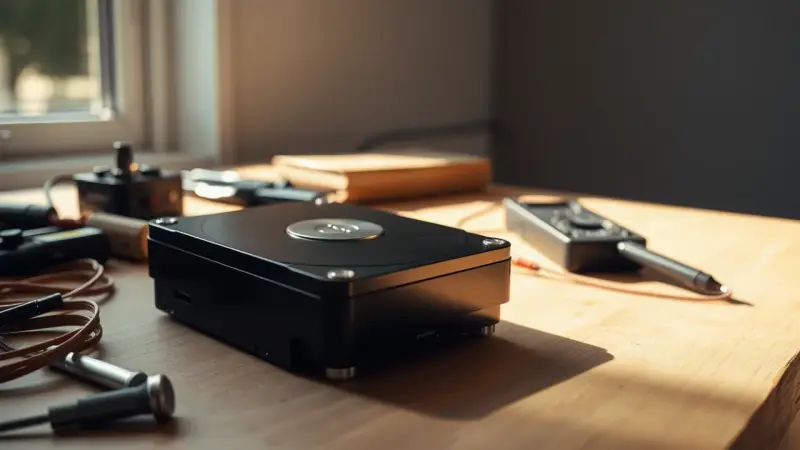
In 2015, Seagate described a partnership with Hikvision that, over the past 10 years, produced what it called the first hard drive designed for surveillance. The work began in 2005, when Seagate sent a dedicated sales and engineering team to Hikvision.
Why Hikvision pushed for a new drive
Hikvision, which entered the market in 2001, said it had built a name in CCTV and video surveillance equipment, with deployments in more than 100 countries. It cited security work at the 2008 Beijing Olympics, the 2012 World Expo and the 2014 FIFA World Cup in Brazil.
Its DVR systems fell short on performance and reliability in 2005. Hikvision R&D director Chenghua Sun said the cause was that integrators and installers filled the recorders with cheap desktop drives. Those drives were not built for surveillance conditions and held back the systems.
What desktop drives got wrong
Seagate firmware R&D director John Fenstermaker explained that desktop drives were designed for a few hours of light use a day, not for recording from several cameras around the clock. Heavy streaming loads led to dropped video frames.
Desktop drives also lacked power management to limit consumption and heat in multi-drive systems. Hikvision product manager Eric Shen noted that recorders often sit in closets or outdoors, away from climate control. In multi-drive enclosures, vibration from spinning drives can build up and hurt desktop models.
The result: SV35 and later generations
Seagate released the SV35 Series, later renamed Surveillance HDD, in March 2006. Its firmware supported ATA streaming, lower command completion times, power-saving modes, operation at higher temperatures, quieter running and caching tuned for heavy writes. The hardware included a balanced motor to reduce vibration.
By 2015 the seventh generation added low-power profiles for motion-sensing cameras, with a quick return to recording when motion was detected. It also added a rotational vibration sensor for NVRs and error recovery controls for RAID. Capacities reached 6TB, which Seagate rated at more than 600 hours of HD recording.
Hikvision said its DVR performance improved after it adopted the drives. In 2015 it also said its surveillance sales had doubled over the previous year, and cited IHS naming it the leading maker across every CCTV equipment category for 2015. Seagate engineer David Frick praised Hikvision’s willingness to try new technology. Hikvision was interested in shingled magnetic recording, which Seagate said could raise capacity by as much as 25 percent.
What came next
Seagate’s surveillance line is now sold as SkyHawk, which Seagate describes as the world’s first purpose-built video drive for camera surveillance systems. It uses ImagePerfect firmware and rotational vibration sensors. The SkyHawk AI range is aimed at NVRs running analytics at the edge. Seagate lists capacities up to 32TB, support for up to 64 HD camera streams and 32 AI streams.