In 2016, soon after Niantic released Pokémon Go in July, Jayajyoti Sengupta, then Asia-Pacific head at Cognizant, used the game’s success to argue that augmented reality (AR) was becoming a business technology. He said the app had passed Twitter in daily active users. He also said the average player spent nearly 44 minutes a day in it, more than on WhatsApp, Instagram, Snapchat or Facebook Messenger.
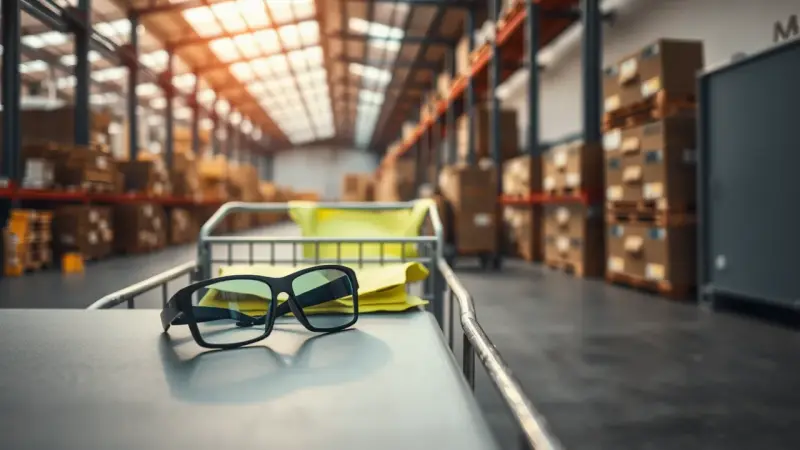
His argument was that AR had moved beyond novelty. He pointed to a DHL pilot in which warehouse workers wore AR-enabled smart glasses for order picking, and he said DHL saw fewer errors and a 25 percent efficiency gain.
Why did a mobile game matter to enterprise IT?
Sengupta read the game’s appeal as proof that people would accept digital information laid over the physical world. Players moved around in real streets and used the device camera to find and capture creatures. In his view, that behaviour showed AR could be learned quickly and used widely.
He also said the enterprise side was easier to run than it looked. In his 2016 account, AR applications were not complicated to deploy and needed little maintenance once in place. Early adopters in retail, manufacturing, utilities, education, tourism and gaming had begun field trials of employee engagement and workflow.
What did the DHL pilot show?
DHL’s own account of the pilot matches the outline Sengupta gave. DHL Supply Chain ran the test in a warehouse in Bergen op Zoom in the Netherlands, working with its customer Ricoh and the wearables firm Ubimax. For three weeks, staff wore head-mounted displays such as Google Glass and the Vuzix M100. The displays showed task information during picking, including aisle, product location and quantity. DHL reported a 25 percent efficiency increase in the picking process.
DHL then widened the test. Throughout 2016, the smart glasses were to be piloted across industries such as technology, retail, consumer and automotive. The partners were Google, Vuzix and Ubimax.
The results of the wider programme were more modest than the first pilot’s. In May 2020, DHL said it had completed its global AR pilot and was expanding Vision Picking to more warehouses. The international trials showed an average productivity gain of 15 percent, higher accuracy and halved onboarding and training times. The pilots had run in the US, mainland Europe and the UK.
How did Sengupta see AR changing training?
Training was the first use he described. He cited a study by the American Society for Training and Development, which found that US$680 more training spending per employee was linked to a 6 percent improvement in total shareholder return on average. He also cited a Louis Harris and Associates poll, which found retention was two-thirds higher than average at companies where staff felt well trained.
His case for AR was that it replaced printed manuals with a handheld device such as an iPad or a wearable such as Google Glass. Pointed at a machine, the device would show a life-sized 3D model with information on each part and its role. Trainees could then work with the model by gesture and touch. He said the method could be adapted by industry, and he gave medical students learning body parts and functions as an example.
What did he expect for inspection and maintenance?
For maintenance, he described animated instructions overlaid on the equipment itself. The aim was to make employees more accurate and to let organisations respond faster in a changing business environment. He listed several uses:
- Field service agents using wearables to open checklists and manuals, control systems by voice and gesture, and get remote support.
- Energy and utilities firms using AR for asset inspection, meter reading, remote monitoring and health and safety.
- Nurses and clinicians using it to learn about surgeries, model organs and explain procedures.
- Carmakers using it in factory planning, product visualisation, and worker and customer support.
Sengupta added that AR could reduce dependence on hardware and people by delivering real-time information based on user movements. He concluded that its flexibility made it a leading candidate for long-term enterprise adoption.
How did the hardware side develop?
The glasses in DHL’s early pilots were first-generation enterprise devices. A 2026 ManageXR analysis noted that the pilots ran on Vuzix M100 and M300 hardware, and said the industry conversation at that year’s AWE conference had shifted to smart glasses. It cited an IDC forecast of roughly 13.6 million smart-glasses units in 2026, rising to 27.3 million by 2030.
Niantic, the maker of Pokémon Go, also moved towards wearables. It announced plans to build AR glasses with Qualcomm on the Snapdragon XR2 platform, and said it would open its Real World Platform to other developers.
A warehouse-technology supplier, Lucas Systems, offered a caution. It wrote that smart glasses for vision picking did not by themselves provide AR or vision recognition. It also said vision picking affects only worker activity at the pick face, and does not directly change travel time or pick density.